From Amazon Warehouse to Running My Own Digital Agency
On February 3rd, 2026, I filed the paperwork to form Gus Digital Solutions LLC in New York. It took about 20 minutes and cost a few hundred dollars. But the path to that moment took years — years of warehouse shifts, corporate jobs, late-night coding sessions, and a growing feeling that I was building someone else’s dream instead of my own.
This isn’t a rags-to-riches story. I’m not writing this from a yacht. I’m writing this from my home office at 11 PM after a full day of client work, with a pot of coffee that’s gone cold. But I’m building something that’s mine, and I want to tell you how I got here because the path is more accessible than most people think.
The Amazon Chapter
Working at Amazon taught me one thing above everything else: systems matter more than effort.
You can work incredibly hard — I did, physically and mentally — but if you’re working inside someone else’s system, your output is capped by their design. The warehouse operates on efficiency metrics that are optimized for the company, not for you. You hit your rates, you go home, you come back tomorrow and do it again.
I don’t say this to trash Amazon. The job paid bills. It taught me discipline. Showing up at 6 AM for a physical job when it’s 15 degrees outside builds a certain kind of resilience that translates to entrepreneurship better than any business book.
But I knew it wasn’t the endgame. During breaks, I was watching YouTube tutorials on HTML and CSS. On days off, I was building terrible websites that nobody would ever see. The first “site” I built was literally a single page with my name on it and a background color I thought looked cool (it didn’t).
Learning at X (Twitter)
After Amazon, I worked at X. Different environment, different energy. Being inside a tech company — even in a non-engineering role — gave me proximity to the world I wanted to break into.
I saw how products got built. I watched engineering teams ship features. I understood, maybe for the first time, that the people building software weren’t fundamentally different from me. They just had skills I didn’t have yet. The word “yet” is important.
X also taught me about the volatility of relying on a single employer. Companies restructure. Priorities shift. Roles change. The only real security is being able to create value independently.
That realization hit different when I was already learning to code on the side.
The Self-Teaching Phase
I won’t romanticize this part. Learning to code while working full-time is hard. Not “Instagram hard” where you post about the grind and get motivational comments. Actually hard, in the sense that you’re exhausted after work and the tutorial you’re following has an error that takes you three hours to debug.
Here’s roughly what my learning path looked like:
Months 1-3: HTML, CSS, basic JavaScript. Built static pages. Everything looked like a 2005 GeoCities site and I was proud of it anyway.
Months 4-6: Discovered Shopify. This was a turning point because suddenly I could build things that made money for real businesses. Not theoretical portfolio projects — actual stores that processed actual orders.
Months 7-12: Dove into SEO, learned how Google actually ranks pages, started understanding that a website nobody can find is just an expensive business card.
Year 2: Got into modern frameworks. React, then Astro. Started building faster, cleaner sites. Picked up enough backend knowledge to be dangerous.
The whole time, I was building for other people on the side. Friends’ businesses first. Then friends of friends. Then strangers who found me through word of mouth. Each project taught me something the tutorials never covered — like how to handle a client who changes their mind about the homepage design for the fourth time.
What Actually Helped Me Learn
- Building real projects over following tutorials. Tutorials give you a false sense of progress. Building something from scratch forces you to problem-solve.
- Reading documentation instead of watching videos. Slower, but stickier. I actually retained what I read.
- Breaking things on purpose. I’d take a working site and intentionally mess up the CSS to see what happened. Then I’d fix it. That’s how you learn what each property actually does.
The Decision to Go Independent
There wasn’t a dramatic “I quit!” moment. It was more of a gradual realization that I was spending 40 hours a week helping someone else’s company grow while spending nights and weekends doing the same thing for myself — and the second one was working better.
By late 2025, I had enough client work to make the jump realistic. Not comfortable — realistic. There’s a difference. Comfortable means you have six months of savings and a full pipeline. Realistic means you can probably make rent if you hustle.
I chose realistic.
On February 3rd, 2026, Gus Digital Solutions LLC became official. A New York LLC, properly filed, properly structured. Not a side hustle anymore — a business.
What Gus Digital Solutions Actually Does
I build websites and handle digital marketing for small businesses. That’s it. No enterprise clients, no Fortune 500 consulting, no buzzword-heavy pitch decks.
My typical client is someone running a local business — a contractor, a gym owner, a restaurant, a specialty retailer — who knows they need a better online presence but doesn’t know where to start. Or they got burned by a previous developer who charged $5,000 for a WordPress template and disappeared.
The services I offer break down into three buckets:
- Website design and development — Custom sites built with modern tools (Astro, Shopify, or whatever fits the client’s needs). Fast, mobile-friendly, built to convert.
- SEO — Getting those sites to actually show up on Google. Technical SEO, content strategy, local search optimization.
- Ongoing support — Because a website isn’t a “set it and forget it” thing. It needs updates, security patches, content refreshes, and someone to call when something breaks at 9 PM on a Friday.
If you’re curious about pricing, I wrote a transparent breakdown of how much a website actually costs in 2026. No “it depends” cop-out — real numbers.
The Hard Parts Nobody Talks About
Wearing Every Hat
When you run a one-person agency, you’re the developer, the designer, the salesperson, the accountant, the project manager, and the customer support team. Some of those hats fit better than others.
I’m good at building things. I’m decent at sales. I’m terrible at accounting. The first time I had to figure out quarterly estimated taxes, I stared at the IRS website for 45 minutes and then called my mom. She didn’t know either, but it made me feel better.
The Income Rollercoaster
A job gives you a paycheck every two weeks regardless of whether you had a productive month. Freelancing gives you feast-or-famine cycles that will test your mental health.
January 2026 was great. I had three active projects and felt unstoppable. The first two weeks of February were dead. No new inquiries, no responses to proposals, nothing. I questioned every life decision I’d ever made.
Then three projects landed in the same week and suddenly I was overbooked. This is apparently normal, but nobody tells you that when you’re in the “famine” part.
Imposter Syndrome
I still get this. A client asks me something I don’t immediately know the answer to, and for about 30 seconds, I’m convinced they’re going to realize I’m a fraud and demand their money back.
Then I look it up, figure it out, and deliver something great. But those 30 seconds are brutal every single time.
What I’ve Learned So Far
I’m only a month into officially running Gus Digital Solutions. That’s not enough time to write a memoir. But here’s what’s already become clear:
Speed matters. The faster I respond to inquiries, the more likely they convert. I’ve lost potential clients because I waited 24 hours to reply to an email. Now I respond within 2 hours during business hours, no exceptions.
Specialization beats generalization. When I said “I build websites,” people nodded politely. When I started saying “I build fast, SEO-optimized sites for small businesses on Shopify and Astro,” people started listening. Same skill set, different positioning.
Your network is your pipeline. Every client I’ve landed so far came from a personal connection or a referral. Not from ads, not from cold emails, not from social media posts. Just people who knew me, trusted me, and had a problem I could solve.
Document everything. Every process, every client communication template, every technical setup. Future you will thank present you when you’re onboarding your tenth client and don’t have to reinvent the workflow.
Why I’m Writing This
Partly because it’s good content for my site. I’m not going to pretend otherwise — I know how SEO works.
But mostly because when I was working warehouse shifts and dreaming about starting my own thing, I would’ve loved to read something like this. Not a millionaire’s success story. Not a “10 steps to passive income” listicle. Just a regular person explaining how they went from Point A to Point B, including the ugly parts.
If you’re in a similar spot — working a job you’ve outgrown, learning skills on the side, wondering if you could actually make it on your own — the answer is probably yes. Not easily, not immediately, and not without a lot of uncomfortable moments. But yes.
The warehouse taught me to work hard. The tech company taught me to think systematically. Going independent taught me that the only person who’s going to build your future is you.
And on February 3rd, 2026, I started building mine.

Written by Gustavo Vasquez
Web developer and digital marketing consultant helping small businesses get online. 15+ years of tech experience, bilingual (English/Spanish).
Book a free consultationRelated Articles
Website Developer Questions
Red flags to watch for when hiring web developers. Understand quotes, set realistic expectations, and protect yourself with the right contracts.
I Replaced Google With Perplexity AI: A Developer's Honest Review
Why I switched from Google to Perplexity AI for research, coding, and daily workflows. Get $10 off Pro with my referral link.
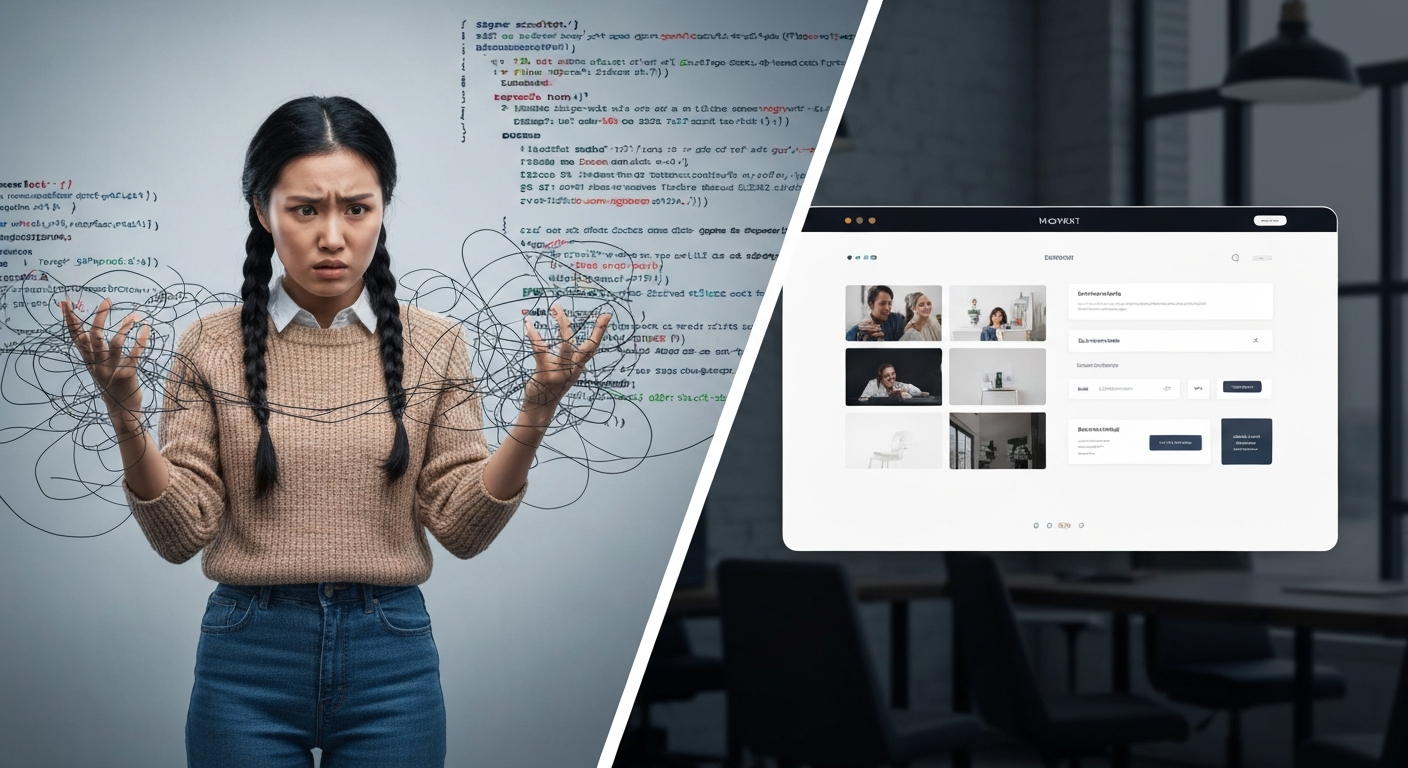
DIY Website vs Hiring a Developer: The Real Cost Breakdown
Honest comparison of DIY website builders vs hiring a developer in 2026. Real costs, hidden fees, time investment, and when each option actually makes sense.
Need help with your project?
Whether it's SEO, a new website, or fixing bugs - I can help.
Get in Touch