How I Built My Personal Brand Online (And You Can Too)
I didn’t wake up one morning with a “personal brand.” There was no grand strategy, no marketing agency, no viral moment. What happened was slower and more useful: I built an ecosystem, piece by piece, and each piece started feeding the others.
Here’s exactly how I did it, what worked, what flopped, and what I’d do differently if I started over tomorrow.
The Ecosystem Approach: Why One Platform Isn’t Enough
A lot of people pick one platform and go all in. They become “LinkedIn guys” or “YouTube creators” and ignore everything else. That’s a mistake — not because any single platform is bad, but because you’re building on rented land.
My setup looks like this:
- Website (gusdigitalsolutions.com) — home base, the one thing I fully control
- YouTube — long-form tutorials and walkthroughs
- LinkedIn — professional networking and client acquisition
- Instagram — behind-the-scenes, personal connection
Each one has a different job. The website converts visitors into clients. YouTube builds trust through teaching. LinkedIn opens doors with other professionals. Instagram shows the human side — the gym, the projects, the daily grind.
The magic happens when they connect. Someone finds a YouTube tutorial, clicks through to my website, sees the services I offer, and reaches out. Or a LinkedIn post gets shared, someone Googles my name, and my site comes up first because I’ve spent time on SEO.
No single platform did that. The ecosystem did.
Building the Home Base First
Before I touched social media, I built my website. This might sound backwards — most people start posting on Instagram or TikTok and think about a website later. But your website is the only place where you control the narrative completely.
I built gusdigitalsolutions.com with Astro, a modern web framework that’s ridiculously fast. Pages load in under a second. There’s no WordPress bloat, no page builders slowing things down. Just clean code, good content, and fast performance.
Here’s what I made sure to include from day one:
- A clear value proposition on the homepage — not “Welcome to my website” but exactly what I do and who I help
- A services page with actual pricing context (not “contact us for a quote” which screams “we’re expensive”)
- A blog with real content that answers real questions small business owners have
- Contact forms that actually work and notify me immediately
The blog is the growth engine. Every post targets a specific question someone might Google. “How much does a website cost?” “Is Shopify right for my business?” “Why isn’t my site showing up on Google?” Each one brings in organic traffic and positions me as someone who knows what they’re talking about.
Tools That Made It Possible
I’m not going to pretend I did everything manually. AI tools accelerated the entire process:
Claude Code handled the heavy lifting on the website build itself. Complex component logic, accessibility improvements, performance optimization — things that would’ve taken me days took hours.
AI automation pipelines help me repurpose content across platforms. A blog post becomes LinkedIn content becomes a YouTube script. One piece of original thinking, multiple formats.
The key is that AI handles the repetitive work while I focus on the thinking and the strategy. The ideas, the angles, the actual expertise — that’s still me.
YouTube: Teaching as Marketing
I started a YouTube channel not because I wanted to be a “YouTuber” but because video builds trust faster than any other medium. When someone watches you explain something for 10 minutes, they feel like they know you. That’s impossible to replicate with a text post.
My approach is simple: teach what I know, show what I build.
What Works on YouTube (For Me)
- Screen recordings of actual work — people love watching the process, not just the polished result
- Honest takes — I’ll say “this tool is garbage” or “I wasted two weeks on this approach” because that’s real
- Specific, searchable titles — “How to Set Up Shopify in 2026” beats “My Shopify Journey” every time
What Doesn’t Work
- Trying to be entertaining when you’re not naturally entertaining (just be useful instead)
- Posting inconsistently and expecting growth
- Ignoring thumbnails — they matter more than the video quality itself
The YouTube channel feeds the website directly. Every video description links back to relevant blog posts and my services page. A viewer watching a Shopify tutorial is exactly the kind of person who might need someone to build their store.
LinkedIn: Where the Money Actually Comes From
I’ll be honest — LinkedIn generates more direct business than any other platform. It’s not even close.
Here’s why: LinkedIn users are already in a business mindset. They’re thinking about growth, hiring, tools, services. When I post about web development or small business SEO, I’m talking to people who either need that help or know someone who does.
My LinkedIn strategy is straightforward:
Post 3-4 times per week. Consistency beats virality. I’ve had posts get 50 views and posts get 5,000 views. The ones that performed “poorly” still put me in front of 50 people who might need a web developer.
Lead with a hook. The first two lines of a LinkedIn post are everything. If they don’t grab attention, nobody clicks “see more.” I usually start with a specific result, a contrarian take, or a question.
Engage genuinely. I comment on other people’s posts — not “Great post!” but actual thoughts. This puts my name and face in front of their audience too.
I wrote a detailed breakdown of free and paid LinkedIn strategies that goes deeper into the tactical stuff. The short version: optimize your profile first, then focus on content, then consider paid options like LinkedIn Premium once you’re seeing organic traction.
Instagram: The Human Element
Instagram is the least “strategic” part of my brand, and that’s intentional. It’s where I post gym sessions, coffee shop workday setups, and random behind-the-scenes stuff.
Why does this matter for a digital agency? Because people hire people they like. Showing that I’m a real human who lifts weights, drinks too much coffee, and occasionally struggles with code makes me more relatable than a polished corporate presence.
I also use Instagram to cross-promote. A new blog post gets a story. A YouTube video gets a reel teaser. My fitness brand guspowerfit.com gets featured regularly, which shows range and proves I practice what I preach about building websites.
What I’d Do Differently
If I started from scratch today, here’s what I’d change:
Start the blog earlier. SEO compounds over time. Posts I wrote two months ago are just now starting to rank. If I’d started six months earlier, I’d be in a much stronger position organically.
Batch content creation. I used to write one post, publish it, then write the next one. Now I batch — write 3-4 posts in one sitting, schedule them out. Way more efficient.
Invest in video quality sooner. My first YouTube videos had terrible audio. Good audio matters more than good video. A $50 microphone would’ve saved me from losing early viewers.
Don’t overthink the “brand.” I spent way too long picking colors, fonts, and logo styles. Nobody cares about your font choice. They care about whether you can solve their problem.
The Compound Effect
The reason an ecosystem approach works is compounding. Each piece reinforces the others:
- Blog post ranks on Google → drives website traffic
- Website traffic → some visitors subscribe to YouTube
- YouTube viewers → connect on LinkedIn
- LinkedIn connections → visit website → become clients
- Client results → become case studies → become blog posts
This flywheel took about 3 months to really start spinning. The first month was basically shouting into the void. By month two, I was seeing organic traffic tick up. By month three, inbound leads started coming through the website contact form.
Getting Started (For Real)
Here’s my honest advice if you’re starting from zero:
- Build a simple website first. Doesn’t need to be fancy. Needs to load fast, explain what you do, and have a way to contact you.
- Pick ONE social platform and post consistently for 30 days. LinkedIn if you’re B2B, Instagram if you’re B2C, YouTube if you’re comfortable on camera.
- Write one blog post per week. Target questions your ideal clients actually Google.
- Connect every platform to every other platform. Link your website in every bio. Link your socials on your website. Create a loop.
- Give it 90 days before you judge results. Personal branding is a slow build. If you’re looking for overnight results, buy ads instead.
The personal brand I have today isn’t because I’m special or talented at marketing. It’s because I showed up consistently, built useful things, and connected the dots between platforms. That’s a strategy anyone can copy — including you.

Written by Gustavo Vasquez
Web developer and digital marketing consultant helping small businesses get online. 15+ years of tech experience, bilingual (English/Spanish).
Book a free consultationRelated Articles
Social Media vs SEO: Where Should Your Small Business Invest First?
Both drive traffic, but they work on completely different timelines. Here's how to decide where to put your limited budget and time.
SEO in 2026
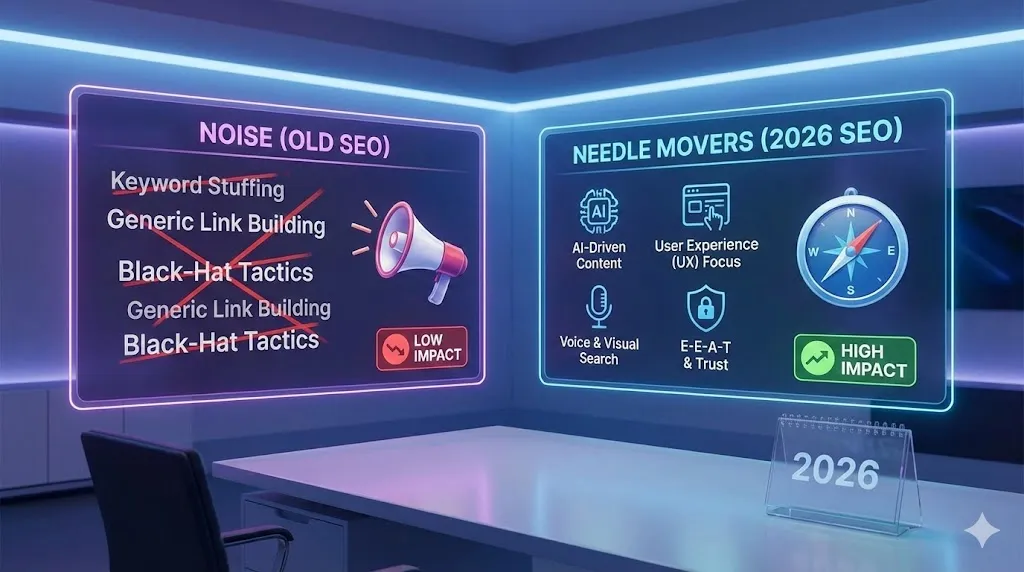
Google's AI Overviews have changed everything. Learn what actually works for SEO in 2026, from E-E-A-T signals to technical fundamentals, and what you can safely ignore.
Need help with your project?
Whether it's SEO, a new website, or fixing bugs - I can help.
Get in Touch